BOOK: The Problem with Plastic: How We Can Save Ourselves and Our Planet Before It’s Too Late
Order | Events | Summary | Praise | Reviews | Bulk Orders | Share | Press | Host an Event | Discussion Questions
December 2025 | BEYOND PLASTICS
By Judith Enck and Beyond Plastics with Adam Mahoney
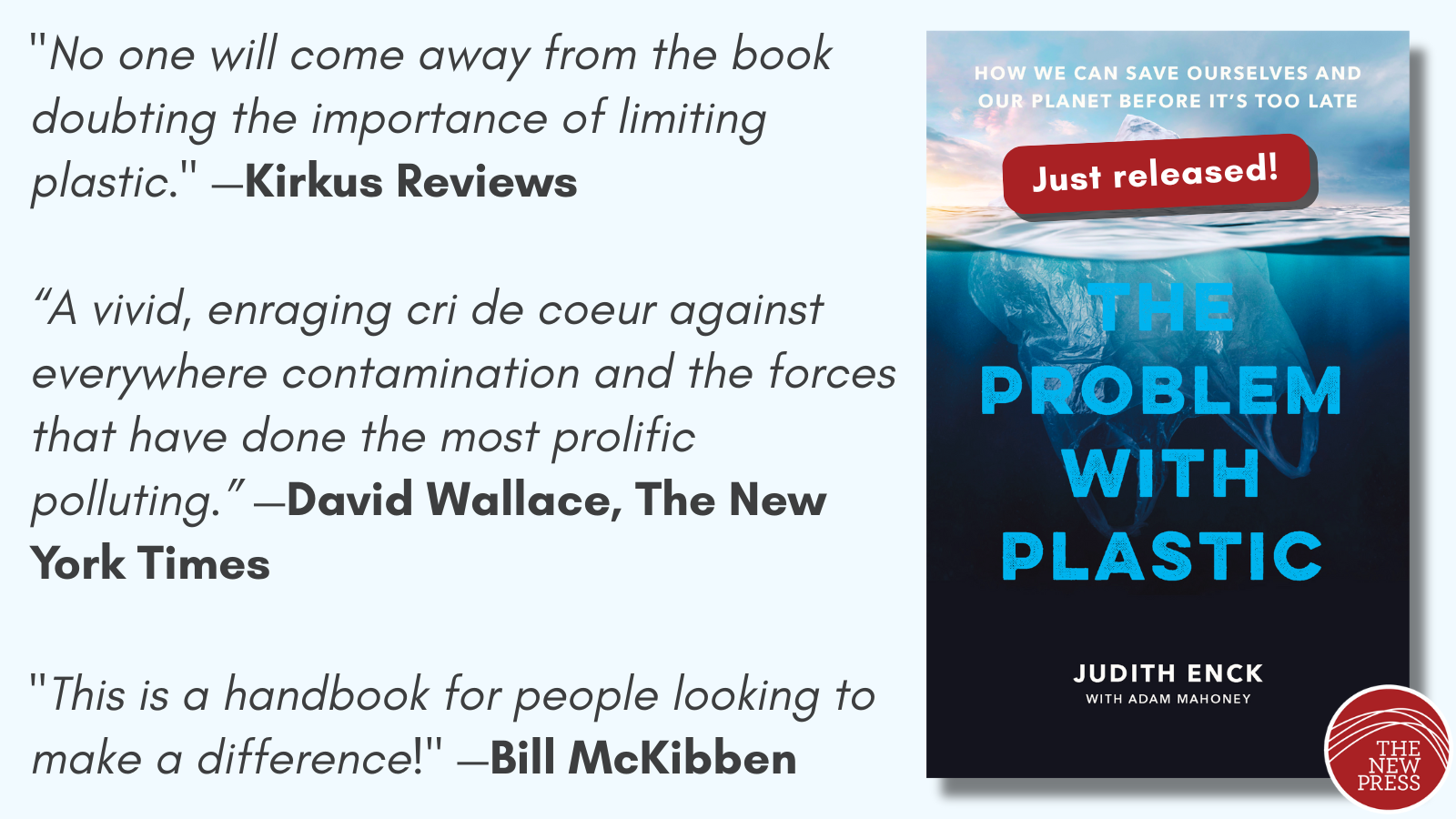
“The Problem with Plastic” was just released by The New Press on December 2, 2025!
"I don't think anyone on planet Earth knows more about the plastics problem than Judith Enck — including, most crucially, what to do about it. This is a handbook for people looking to make a difference!"
—Bill McKibben, author of “Here Comes the Sun”
“The Problem with Plastic” is available in hardcover, ebook, and audiobook format. We hope you’ll buy the book from your local independent bookstore; if they don’t already have it in stock, ask them to order it for you!
It’s also available from our publisher, The New Press, as well as from the online booksellers linked below, and others.






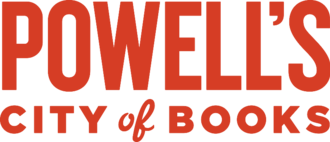
A powerful investigation into plastic’s impact on human health and the environment, and how we can fight back
What if we said that the line between societal advancement and environmental degradation is as thin as a layer of plastic wrap? Once a marvel of modern science, plastic has become so inextricably woven into our lives that imagining a world without can seem impossible. Over the last 75 years, plastic has cradled our planet in a synthetic embrace.
“The Problem with Plastic” critically examines the paradox of this material, first celebrated for its innovations and now recognized for its devastating environmental and public health impacts. This compelling narrative reveals how plastic pollution contributes to poisoned oceans, polluted air, a warming planet, and overwhelming waste, particularly affecting marginalized communities, which bear the brunt of petrochemical pollution. The book highlights the pervasive presence of microplastics in the environment and the human body, challenging the belief that recycling can solve the crisis.
In addition to uncovering environmental racism and debunking industry claims, “The Problem with Plastic” emphasizes the urgent need for action against plastic’s toxic legacy, and offers readers practical, actionable solutions, including a “household waste audit,” which empowers readers to track and reduce their own plastic consumption.
“Plastic is a silent killer! ‘The Problem with Plastic’ exposes the harms of plastic and the plastic industry worldwide. From beginning to end, it outlines how plastics came into our lives and have been hurting us ever since. A must-read for folks trying to fight plastic pollution and stop the production of plastic.” —Sharon Lavigne, executive director of RISE St. James, 2021 Goldman Prize winner, and lifelong resident of St. James Parish, Louisiana in Cancer Alley
“This is not a story of each individual's use of plastic -- it's a story of intentional design. This salient book exposes the environmental racism baked into the plastic crisis, demanding that we name names, follow the money, and change the system to prevent further harm to people and our planet.” —Dr. Robert D. Bullard, distinguished professor, Texas Southern University and "Father of Environmental Justice"
“Plastic pollution is not just an environmental crisis—it’s a justice issue. In The Problem with Plastic, Judith Enck and Adam Mahoney lift up the frontline communities who are resisting Big Plastic and provide readers with the tools to take action. This book is a powerful roadmap for anyone ready to fight back against pollution, protect our health, and build a more just, sustainable future.” —Rev. Lennox Yearwood Jr., president & CEO, Hip Hop Caucus
"I don't think anyone on planet Earth knows more about the plastics problem than Judith Enck — including, most crucially, what to do about it. This is a handbook for people looking to make a difference!" —Bill McKibben, author of “Here Comes the Sun”, founder of 350.org
“This book covers all bases. It is historic and current, it is technical and easy-to-read, it is "big-picture" and a detailed, practical, how-to-do guide. It is a call for action to deal with one of the most crucial and silent disasters of our times: the race against being buried in plastics. It is a must for decision-makers and anyone who cares about life on this planet we call home." —Ramón J. Cruz, former president of The Sierra Club and former vice president of Puerto Rico’s Environmental Quality Board
“Systemic problems from plastic pollution have been hidden and sugar-coated for decades by the fossil fuel industry, which knowingly encouraged generations of "out of sight, out of mind" plastics consumption, resulting in the degradation of our health, our environment, and our natural resources. Only now, with books like this, are we beginning to understand the full breadth of the impact of plastics pollution and explore meaningful ways to join together to act with purpose and conviction. As this book confirms, there are no easy answers to big problems like plastic pollution, but there is much we can and must do to stem the tide, or we will all pay the price.” —Gina McCarthy, former U.S. Environmental Protection Agency Administrator
“‘The Problem with Plastic’ is a powerful wake-up call and a necessary reckoning. It exposes not only how plastic destroys our environment, but also how it disproportionately affects vulnerable communities. Most importantly, it empowers readers with the tools to take action in their own lives.” —Cynthia Nixon, actress and activist
"Plastic pollution has reached crisis proportions, and false solutions abound. But, as ‘The Problem with Plastic’ shows, there are real solutions out there. And, fortunately, there are people like Judith Enck working to enact them." —Elizabeth Kolbert, Pulitzer Prize-winning author of “The Sixth Extinction”
“The plastics industry thrives on the plantation to pollution pipeline that has plagued fenceline communities like those in Louisiana’s Cancer Alley for generations. But although plastic has been a part of our past, it does not have to be a part of our future. From advocating for policy changes to implementing systems of reuse, ‘The Problem with Plastics’ provides a game plan and a game change for healing the communities most impacted by plastics’ production, use, and disposal.” —Jo Banner, co-founder, The Descendants Project
"We can’t talk about climate or justice without talking about plastic. This urgent and powerful book challenges us to imagine a world where communities and ecosystems are no longer treated as disposable." —Catherine Coleman Flowers, author of “Waste”, and one of Time’s Most Influential People of 2023
“The science behind the dangers that plastics pose to the health of our species (and planet) has been accumulating for nearly 40 years and is frighteningly clear. But far too little has been written about the action that these threats call for. ‘The Problem with Plastic’ fills that gap expertly, and Judith Enck — with her impressive record of successful advocacy — is the person we need to sound the call to action that this crisis requires.” —Dr. Shanna Swan, author of “Countdown”
"'The Problem with Plastic' is an authoritative critique of the crisis at hand, a takedown of false solutions, and an urgent call to elevate what will actually work to stop this environmental and public health catastrophe." —Matt Simon, author of "A Poison Like No Other: How Microplastics Corrupted Our Planet and Our Bodies"
“Conversational, informative, and practical, “The Problem with Plastic” is both a detailed primer on plastic pollution and an actionable guide to the solutions we need. Judith Enck and Adam Mahoney show readers how plastic pollution became one of the world’s biggest environmental and public health catastrophes—and why there is still hope the crisis can be overcome.” —Erica Cirino, communications manager of Plastic Pollution Coalition, and author of “Thicker Than Water: The Quest for Solutions to the Plastic Crisis”
"Plastic is in our refrigerators, in our clothes, and even in our lungs. As 'The Problem With Plastic' shows, that's not an accident: We're here because of the fossil fuel and petrochemical industries. The road to fixing that problem will necessarily be long and winding, but as Judith Enck and Adam Mahoney remind us, it is possible to traverse it." —Dharna Noor, fossil fuels and climate reporter at the Guardian
"A powerful wake-up call, paired with a blueprint for action." —Rebecca Prince-Ruiz, founder and executive director of Plastic Free Foundation
The first half of former EPA administrator Enck’s book enumerates plastic's problems, which will be familiar to many readers: the material itself, along with its manufacture and disposal, is a massive source of pollution, with well-documented negative impacts on humans, animals, and ecosystems. The chapter on more recent developments in plastics recycling and disposal highlights how chemical recycling, biodegradable plastics, and waste-to-energy solutions fail to address the pollution and exploitation inherent to plastic. The real solutions are also well-known: make less plastic in the first place (especially single-use plastic) and utilize less of the plastic that is made. Of most significant interest and substance here are Enck’s recommendations for how to do this, including forming activist communities and regulatory advocacy. Enck, the president and founder of Beyond Plastics, writing with climate and environmental reporter Adam Mahoney, encourages readers to get involved with her own organization as one option. VERDICT A reasonable and mostly well-reasoned summation of both the problems with plastic and how they might be addressed. For readers interested in learning more about environmental subjects and seeking ideas for how to engage.
—Genevieve Williams, Library Journal, November 2025 issue
Images of plastic- and fossil fuel-related disasters and pollution, such as toxic spills and trash strewn beaches, make the problems seem insurmountable, too big and too horrible for the average person to understand, let alone start to solve. But in The Problem with Plastic: How We Can Save Ourselves and Our Planet Before It's Too Late, Judith Enck, the founder and president of Beyond Plastics, along with climate and environmental reporter Adam Mahoney have assembled an approachable, easy-to-read, and comprehensive overview of the problem, the people already fighting back, and the steps that the average person can take to become part of the solution.
Enck and Mahoney first outline the short history of society's dependence on plastic. They emphasize that corporate greenwashing of the material has been a large part of the marketing strategy alongside an emphasis on the convenience of using plastic. They also show how the displacement of responsibility of plastic pollution onto consumers instead of producers has been a part of the industry's strategy. They trace not only how "reuse, reduce, recycle" became ingrained in the social lexicon but also how more recent industry efforts build on that messaging. Enck and Mahoney also carefully and straightforwardly outline the harms caused to humans, animals, and the environment at all points of the plastic cycle, from fossil fuel extraction, through treatment and production, to the eventual disposal. They paint a grim picture of an industry that has now manage to impact everyone at all levels of life, but especially the poor communities and communities of color who bear the brunt of the consequences for popular reliance on the material.
Importantly, Enck and Mahoney do not just leave their readers adrift on a floating waste island of existential dread. Instead, they emphasize ways that all people can get involved. While they do outline steps for individual changes people can make if they have the resources to do so, they highlight routes for collective action through political engagement, such as writing letters to government officials--with templates available online. The Problem with Plastic strongly underscores that, while the industry has power, people working together have more, and provides the baby steps needed to help the public realize its power to address plastic pollution. --Michelle Anya Anjirbag, freelance reviewer. Read on Shelf Awareness.
—Shelf Awareness

An exposé of the plastics industry warns of the damages done to human beings and the planet. Enck and her environmental advocacy group, Beyond Plastics, have put together a heavily footnoted book that details the many ways in which plastic is harmful to the environment and to human health, from the presence of microplastics in the ocean to the adverse impact on communities where plastic is produced, to the dangers of incinerating plastic. Much attention is paid to plastic recycling as a false panacea “designed to make us feel better.” With a tone that varies, sometimes in a single chapter, from term paper to peppy exhortation, the book shows certain signs of authorship by committee. And it’s not always clear who the intended audience is, with sentences like “Once upon a time millions of people lived on a planet called Earth and—get this!—survived without plastic.” As a manifesto, it’s certainly dramatic. Although it does pause occasionally to point out actions that individual consumers can take—shop in bulk at food co-ops, “avoid single-use plastic water bottles”—the primary villain here is not the average citizen but “fossil fuel, chemical, and plastic companies.” The book contends that “the most powerful change comes from pushing for governmental regulation of plastic.” Providing documentation of small-scale success on the local level, it offers multiple links to forms. “This is a long process,” the authors write, “but we know that citizen action works—it’s how we removed lead from gasoline to safeguard children’s health….We can do it again, but it will take collective effort and persistence.” While it’s hard not to wonder whether the campaign might skew more idealistic than realistic, the authors’ goals can’t be faulted. No one will come away from the book doubting the importance of limiting plastic.
A call to action that could be stronger—but is hard to dispute. Read the review on Kirkus.com
—Kirkus Reviews
We love book clubs! And book clubs love meaty discussion questions they can sink their teeth into. Dig into our reading and discussion guide which offers plenty of questions to start your conversation.
If you are a bookstores, organization, or individual interested in placing a bulk order of The Problem with Plastic, please submit this bulk order form. Shortly after the form is completed, The New Press’ sales team will follow-up to provide a pro-forma invoice that will break down the cost of books after the bulk discount, plus shipping and applicable taxes. At the same time, they will share info about how to finalize the purchase. Once payment is complete, the order will be processed and shipped from their warehouse in TN. Please note that it’s best to place your bulk order a few weeks before your need-by date to ensure timely delivery.
For more information on bulk orders, please contact Derek Warker (he/him), Director of Publicity and Book Marketing at The New Press at dwarker@thenewpress.org or (212) 629-4636.
GENERAL BULK DISCOUNT SCHEDULE:
10 – 99 copies, 40% + shipping and applicable taxes
100 – 249 copies, 45% + shipping and applicable taxes
250 – 999 copies, 50% + shipping and applicable taxes

We’ve put together a simple sharing toolkit to make it easy to spread the word about the report and checklist. The toolkit includes graphics, sample text for sharing it on social media, a sample outreach email, newsletter blurb, and praise for the book.
News Conference
Watch the recording of the 12/2/2025 news conference with co-authors Judith Enck and Adam Mahoney.
Press Toolkit
Are you a journalist looking for information? Click here to download the press toolkit for the book (PDF).
Coverage
The Problem with Plastic: How We Can Save Ourselves & Our Planet | KALW’s Your Call | May 4, 2026
The Problem with Plastic, Featuring Judith Enck | Vermont’s Voice | April 22, 2026
The True Dangers of Microplastics with Judith Enck | the goop podcast | April 14, 2026
Professor Judith Enck: “The Problem with Plastic” | Digging in the Dirt with Kevin Gallagher | March 26, 2026
By the Book: 'The Problem with Plastic — How We Can Save Ourselves and Our Planet Before It’s Too Late' | Courtland Standard | February 28, 2026
'The Problem With Plastic' is dire, but still holds hope | KNKX Public Radio | February 20, 2026
We can solve the plastic pollution crisis with Judith Enck | Outdoor Minimalist | February 16, 2026
Former EPA administrator on Trump, climate change & plastic pollution | KALW Your Call | February 16, 2026
Plastics everywhere, and the myth that made it possible | Premium Beauty News | January 26, 2026
Plastic Pollution Requires Urgent Action, Says Author Judith Enck | The Good Men Project | January 24, 2026
Plastics everywhere, and the myth that made it possible | Phys.org | January 22, 2026
Book Review: Confronting the Bane of Plastic Pollution | Undark | January 14, 2026
Judith Enck on the Plastic Crisis—and How to Reduce It at the Source | The River | January 11, 2026
From Ocean to Bloodstream: The Reality About Plastic | Who What Why | January 9, 2026
The Problem with Plastic - How We Can Save Ourselves and Our Planet Before It's Too Late | BookTV C-SPAN | January 7, 2026
Former EPA administrator warns plastic pollution crisis demands immediate government action to protect human health | EnviroLink | January 7, 2026
Judith Enck: The Problem With Plastics | Sea Change Radio | January 6, 2026
Judith Enck | This Sustainable Life | January 6, 2026
Plastic pollution requires urgent action, says author Judith Enck | Mongabay | January 6, 2026
Former EPA Official Judith Enck on How to Save Our Planet from Plastic | KQED | January 5, 2026
A “Call to Action” in the Fight Against Plastic Pollution | Sierra | January 4, 2026
January Hudson Valley Events | Chronogram | January 1, 2026
An Interview with Judith Enck | Washington Independent | December 30, 2025
Our Disposable World | Throughline | December 23, 2025
The Best Books This Week | Shelf Awareness | December 19, 2025
A brighter spotlight on a plastics critic | Plastics News | December 12, 2025
New book offers solutions to plastics crisis | Louisiana Considered WKNO | December 10, 2025
Vermont Conversation: A former EPA official on how the plastics industry sabotages real recycling | VT Digger | December 10, 2025
Working to end plastic pollution | The Carbon Almanac | December 10, 2025
The Plastic Problem is Worse than We Thought | Factually! with Adam Conover | December 10, 2025
“The Problem with Plastic”: Former EPA Official on How to Save the Planet Before It’s Too Late | Democracy Now | December 8, 2025
Kitchen Nightmare: How Plastic in Everyday Objects Leaches into Food, Hurting Human Health, Environment | Democracy Now | December 8, 2025
The Problem with Plastic | The Ralph Nader Radio Hour | December 6, 2025
Judith Enck on the Campbell Conversations | WRVO | December 6, 2025
Former EPA administrator Judith Enck discusses her new book 'The Problem with Plastic' | Capital Tonight, Spectrum News | December 5, 2025
Wishing You a Plastic-Free Holiday Season | Rising Up with Sonali | December 4, 2025
A World Without Plastic | Marketplace | December 3, 2025
"The Problem with Plastic" by Judith Enck | WAMC | December 2, 2025
New Book Releases | Porchlight Books Blog | December 2, 2025
Plastics and The Cost of Convenience on Black Communities | Capital B News | December 2, 2025
Solving The Problem Of Plastic Pollution With Judith Enck | Care More Be Better | December 1, 2025
Recycling Can’t Solve Our Plastic Crisis | Time (Op-Ed) | December 1, 2025
Peeling Back the Curtain on Big Plastic’s False Solutions | Inside Climate News | December 1, 2025
'This is a book for people who want to change the world' | The Bennington Banner | November 28, 2025
Host Shannon Lovgren Interviews Judith Enck | EarthSayers Podcast | November 27, 2025
Bennington College Hosts Talk on New Plastics Crisis Book | IBerkshires.com | November 25, 2025
Judith Enck sur le problème du plastique | Les Actualités | November 23, 2025
Judith Enck on the Problem with Plastic | Corporate Crime Reporter | November 23, 2025
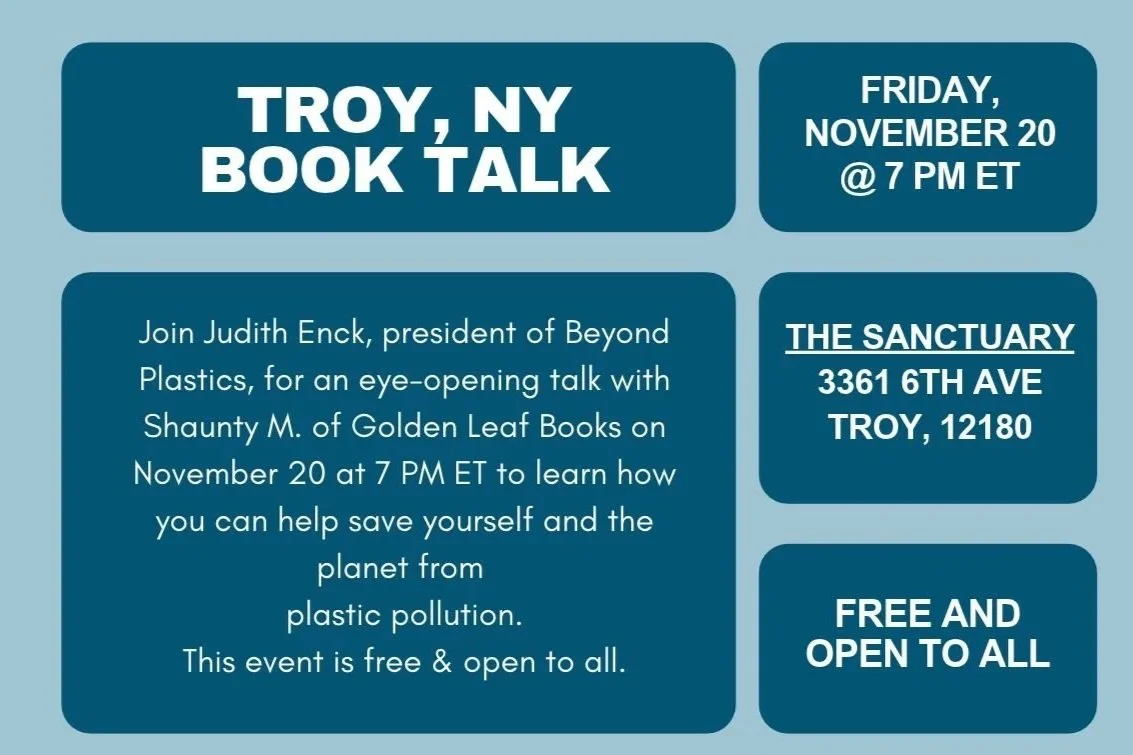
“The Problem with Plastic” by Judith Enck, Adam Mahoney, Beyond Plastics | The Sanctuary for Independent Media | November 21, 2025
How Can You Navigate a World of Inescapable Pollution? | David Wallace-Wells (Opinion), The New York Times | August 6, 2025

QUESTIONS OR IDEAS?
We welcome your feedback, questions, and ideas. You can contact us by email at beyondplastics@bennington.edu.
